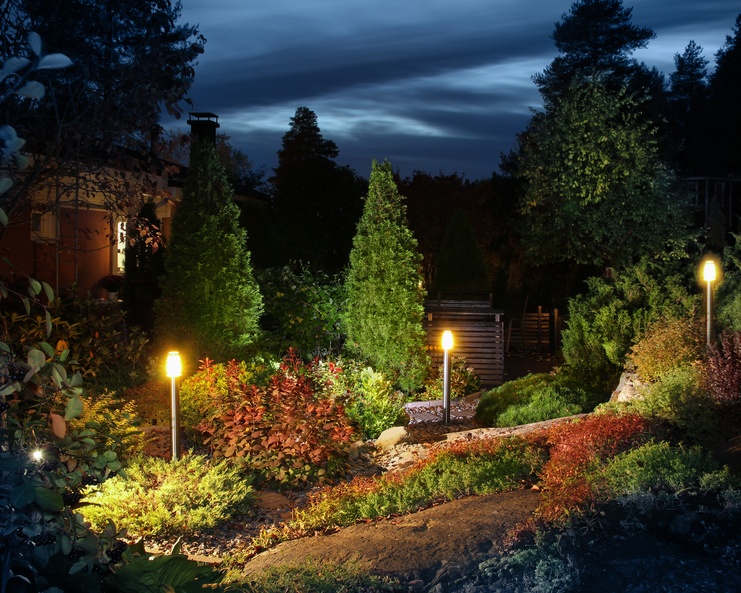
A patio can feel cheerful at lunch and completely different after sunset. That change shows how layered lighting can shift the mood of a patio while keeping the surrounding garden part of the evening view.
Layered lighting uses multiple sources rather than relying on a single bright fixture to light the whole space. Together, they create depth without washing out the plants you’ve worked hard to grow.
Start With a Soft Overall Glow
Begin with gentle lighting that helps people see without making the patio feel like a parking lot. A dimmer gives you control as the evening changes.
Warm-toned lighting creates a more inviting atmosphere outdoors than harsh, cool white bulbs. A softer glow also helps nearby plants, containers, and garden beds remain part of the evening view instead of fading into the background.
Place the main light where it won’t shine directly into anyone’s eyes. Shielded fixtures direct light downward, making the patio feel more comfortable while keeping the surrounding landscape visible.
Add Light Where You Need It
Task lighting helps with specific patio activities. A small fixture near the grill makes food preparation easier. Rechargeable lanterns can brighten a card game without lighting the whole yard.
You don’t need equal brightness everywhere. Focus light where someone needs to read or serve food. Keep nearby seating softer so conversations feel relaxed.
Let the Garden Stay in the Picture
The patio may anchor the space, but the garden gives it character. Aim a subtle accent light toward a favorite tree or textured planting bed. Low path lights can guide people past containers without competing with the flowers.
Avoid pointing strong beams straight into leaves from close range. Harsh light can flatten color and create sharp shadows. A wider, gentler beam reveals more texture while keeping the plants connected to the mood.
Use Accent Lighting With Restraint
Accent lights bring attention to a feature you love, such as a climbing vine or sculptural planter. One or two carefully placed fixtures make a stronger impression than a row of bright spotlights.
String lights can add a playful touch above a dining area. Keep them warm and dim enough that they support the scene rather than becoming the scene.
That balance shows how layered lighting changes a patio’s mood. The base layer makes the space usable, while task lights support your work. Accent lighting gives the eye somewhere to rest.
The best result feels welcoming without pulling attention away from the garden.
Retire Old Bulbs Responsibly
Lighting updates might leave you with some older bulbs that require a bit of special care. Fluorescent bulbs, for instance, contain mercury, so they’re not suitable for regular household trash.
Taking the time to dispose of fluorescent lights properly is a wonderful way to be environmentally responsible during your patio refresh. Be sure to check with your local recycling centers or household hazardous waste programs for the right drop-off instructions.
Give Working Lights a Second Home
If the bulbs still work and the fixtures remain in good condition, move them to a garage, potting shed, or utility area where you need brighter task lighting. Keep any damaged bulbs out of rotation and handle older fluorescent lights carefully during the move.
Let the Evening Set the Tone
A great patio lighting plan should feel adaptable and warm. Brighten it up as guests arrive to create a lively atmosphere. Soften the glow during dinner for a cozy vibe, and later, let pathway lights gently guide everyone along.
You don’t need many fixtures—just a few thoughtfully placed lights can make your garden feel welcoming after dark and help set the perfect mood for each moment.