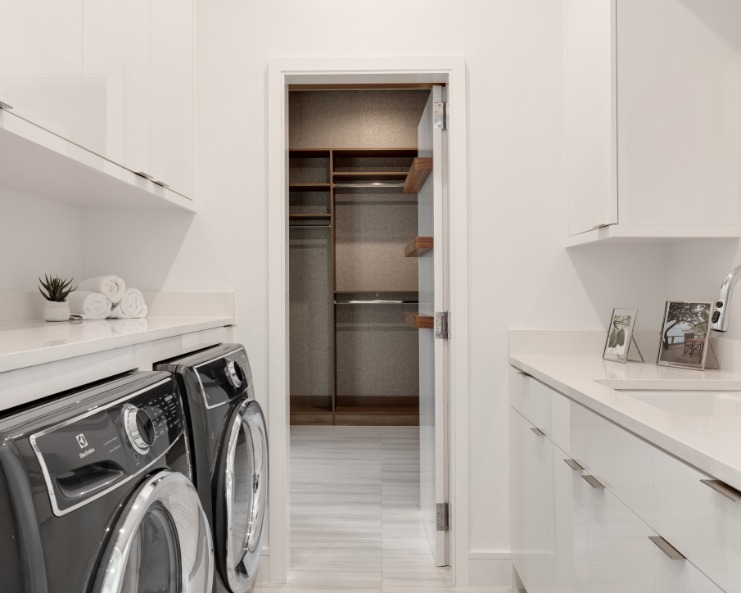
A laundry room should make washing, drying, and sorting clothes less frustrating, yet many layouts create extra steps instead of reducing them. Thoughtful design helps you use the available space efficiently while keeping supplies close and clothing off the floor. Whether you are planning a renovation or making DIY updates, review these tips for designing a laundry room that works better.
Plan Around Your Laundry Routine
Before moving cabinets or buying storage pieces, think about how you move laundry from the hamper to the washer. For example, you may want to place hampers near the entrance, keep detergent beside the machine, and reserve a nearby surface for folding so you do not carry clothing around the house. A layout based on your habits can save time and prevent clean items from piling up elsewhere.
Use the Walls for Storage
You should also consider adding wall-mounted cabinets, floating shelves, hooks, and hanging rails. These can hold supplies on your walls while restoring valuable walking space. However, when you make these additions, make sure you put on all the safety essentials you should wear for home renovations so you can avoid hurting yourself while improving your laundry room.
Create a Comfortable Folding Area
Another tip for designing a laundry room that works better is creating a comfortable folding area. This dedicated surface keeps clean laundry contained and gives you room to sort clothing before returning it to closets.
You might install a countertop above front-loading machines or add a wall-mounted table that folds away. Choose a surface that can handle moisture and routine cleaning, since spills and damp garments can damage delicate materials.
Add Storage That Can Move
A rolling cart can fit between appliances, hold stain treatments and dryer sheets, or travel elsewhere when you need supplies nearby. After researching how to choose the right casters, you can build a cart that will support the expected weight and move smoothly across your flooring. This will make your storage cart a dependable part of the room rather than another obstacle to work around.
Improve Lighting and Ventilation
Good lighting helps you read care labels and notice clothing that should not enter the dryer. Combine an overhead fixture with task lighting above the sink or folding counter, while using bulbs that show colors accurately without making the room feel harsh. Ventilation also matters because moisture can linger, so maintain the dryer vent and consider an exhaust fan or operable window.
A practical laundry room does not require a full remodel, but it benefits from choices that support how you complete each task. Start with the layout, then add vertical storage, a folding station, useful lighting, and mobile pieces that make the room more flexible. When every feature serves a purpose, laundry day can feel more organized and require fewer trips between rooms.