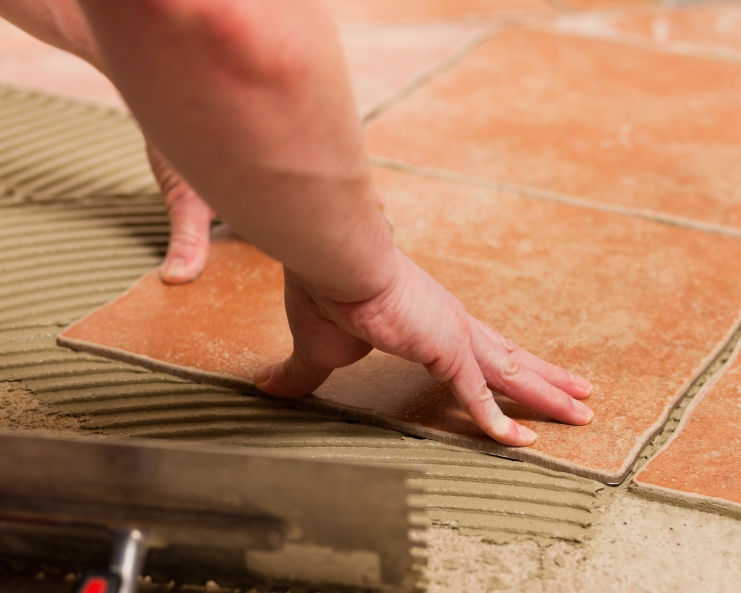
Tiling is a home renovation project that many homeowners are perfectly capable of doing themselves. However, the process of placing and gluing tiles together on a floor is more complex than many DIYers bargain for. To ensure a quality renovation, here are some important mistakes to avoid when tiling your home yourself.
Working Without the Right Tools
You might think you can get by with just your hands, but specialized tools are essential for precision and efficiency. Specifically, you’ll want to find the right tile cutter to get clean cuts. Additionally, a notch trowel is essential to apply adhesive evenly. For a professional finish, a tile spacer guarantees consistent gaps for grouting. Finally, you’ll want a spirit level to check the alignment. Without these tools, you risk uneven tiles and a sloppy appearance.
Placing Tiles on an Unprepared Surface
It takes some work to clean and sand your flooring, but a smooth, clean surface ensures that your tiles adhere properly. Completely clean the application area and repair any cracks or irregularities. Apply a primer or sealer if necessary, especially in moisture-prone areas. Your tiles should sit on a solid, clean, and level surface to guarantee durability and visual appeal.
Eyeballing the Tile Placement
Accurate measurements are time consuming, but precision matters when placing tiles. Starting with an accurate plan will help you save money on your renovation project by drastically reducing the likelihood of the need for a redo.
So resist the temptation to eyeball it. Create a detailed plan and measure your space carefully before laying the first tile. Use a chalk line or laser level to establish straight reference lines.
Using the Wrong Type of Grout
Grout isn’t one-size-fits-all; it should be suited to the room in which you’re installing tile. For example, if you’re tiling your bathroom or kitchen, you’ll want a water-resistant grout. This will prevent cracking and discoloration from spills and water or moisture damage.
Speeding Through the Grouting Process
Speedy grouting makes for a low-quality tile installation. Take your time, spread the grout evenly using a rubber float, and press it firmly into the joints. After waiting a few minutes, use a damp sponge to wipe away excess grout from the tiles’ surface, working at a diagonal angle. Additionally, wait until the grout is completely dry before considering the project done.
While tiling your home yourself can be exciting, you should know the mistakes to avoid to produce a professional-looking result. Prepare, plan, and work slowly—you’ll end up with a beautiful, lasting surface you can be proud of.