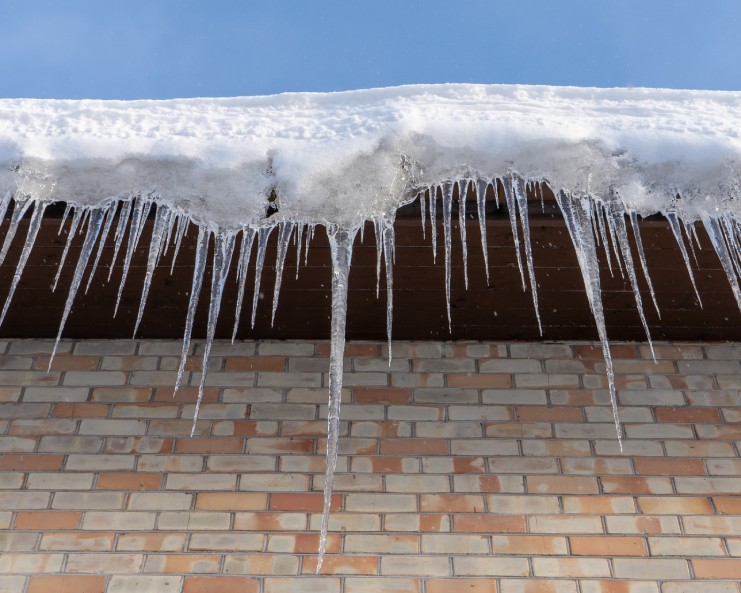
When winter envelops your home with a blanket of snow, the picturesque scene can quickly sour if ice dams form on your roof. What exactly are these icy barriers, and why do they cause such a fuss? Imagine a ridge of ice at the edge of your roof, preventing melting snow from draining properly.
This accumulation of water can lead to leaks, damage to your roof, and even structural issues with your home. In this guide, we’ll explore the causes of ice dams and how you can fix them, helping you keep your home cozy and your roof free of water damage.
What Causes Ice Dams?
Ice dams form when the temperature at the roof’s surface is inconsistent. Typically, this happens when the upper part of the roof becomes warm enough to melt the underside of the accumulated snow while the edges remain cold, allowing refreezing. If you see ice dams forming on your roof, this is a clear sign that your attic is under-insulated.
As the melted snow travels down the roof, it reaches the colder eaves where it refreezes, creating a buildup of ice that traps additional melting snow on the roof. This trapped water can seep under shingles, leading to leaks and water damage inside the home.
How Can You Fix Ice Dams?
To fix ice dams, it’s critical to address both the immediate problem and the underlying causes. Start by removing the ice dam itself. One of the safest approaches is to use a roof rake to clear accumulated snow from your roof, reducing the chances of further melting and refreezing. Avoid using sharp tools or axes, as these can damage roofing materials.
For a more immediate solution, you can create channels through the ice using a calcium chloride ice melt product, which helps water escape from behind the dam. However, these are temporary measures. Long-term prevention requires a much more hands-on approach.
How to Prevent Ice Dams From Forming?
Now that we know what causes ice dams and how to fix them in the short run, how do we handle the underlying causes and prevent the formation of ice dams altogether? First, it’s important to acknowledge that the material of your roof may be the culprit. If you live in a particularly snowy area, metal roofs are the best choice for winter weather, as clay and asphalt tiles can’t handle the weight of snow.
A well-insulated attic prevents warm air from escaping into the upper structure of your house, which helps keep the roof uniformly cold, reducing the chances of snow melting unevenly. Consider increasing the thickness of the insulation or adding more where necessary, especially in areas that are subject to frequent temperature changes.
Additionally, ensure proper attic ventilation. Vents along the eaves, soffits, and ridge can facilitate good air circulation, which helps cool the roof and prevent ice dams. Installing baffles or ridge vents can further aid in maintaining a balanced airflow. It’s also crucial to check for and seal any air leaks in your attic space. Look for gaps around chimneys, light fixtures, and other penetrations, and use caulk or foam sealant to close them. If necessary, you can also install heated cables along the roof’s edge to prevent ice formation.
Remember, a little preparation goes a long way in turning a potential winter woe into a minor inconvenience.